
Success Stories

Ethical Storytelling and Smart Technology Help GOSUMEC Strengthen Its Community

GOSUMEC Foundation USA, an alumni-driven nonprofit rooted in the legacy of Seth Gordhandas Sunderdas Medical College and King Edward Memorial (K.E.M.) Hospital in Mumbai, India, has centered its mission on supporting medical students through scholarships, mentorship, and enduring community connection. As the organization expanded its programs, however, its leadership found it increasingly difficult to capture and share the stories that reflected the heart of its work.

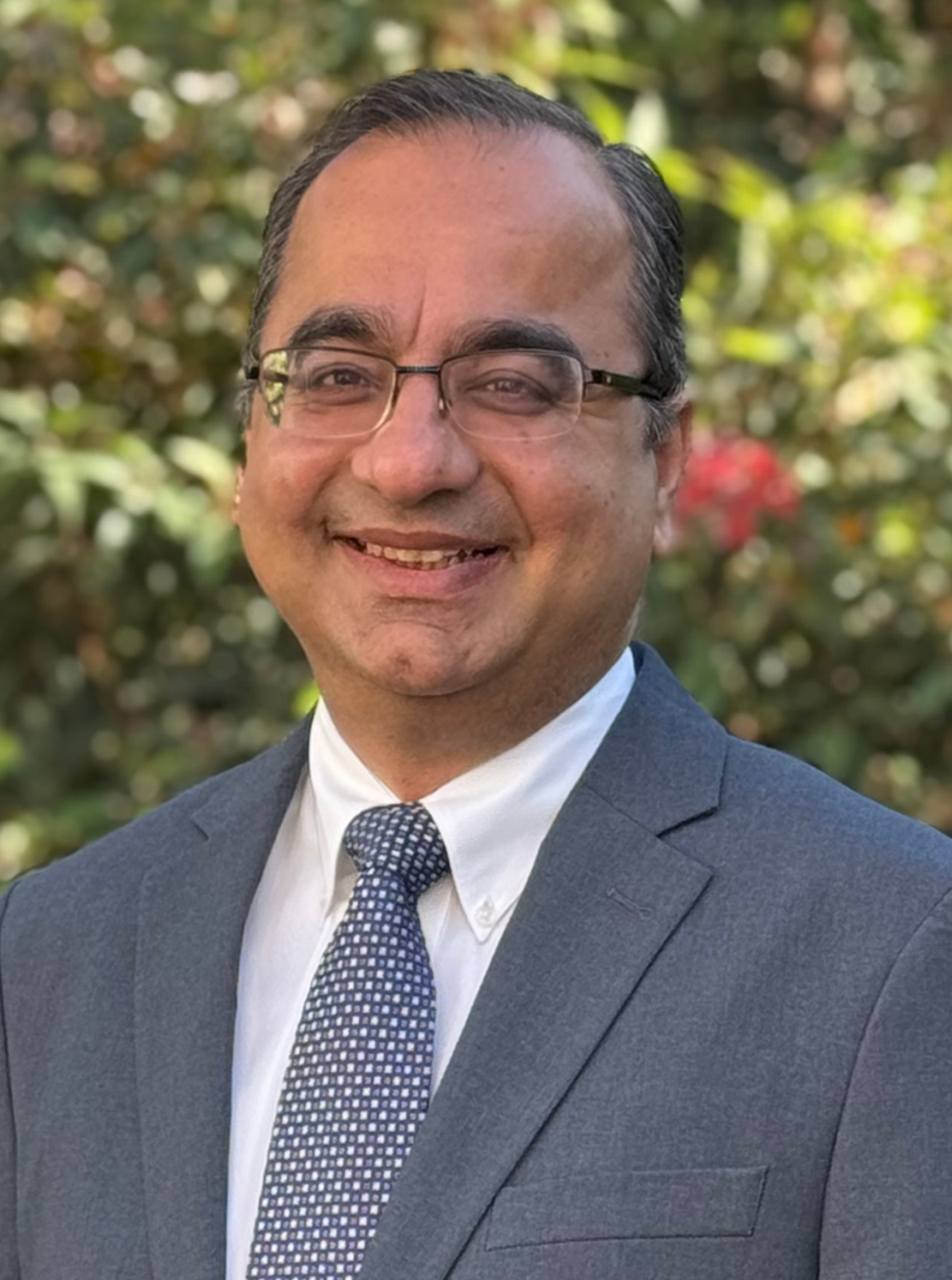
Initially, stories surfaced informally — through WhatsApp messages, emails, and conversations — making it nearly impossible to track consent, manage content responsibly, or communicate impact with consistency. Foundation President Dr. Sanjay Bindra recognized the need for a more ethical and sustainable approach to storytelling — one that preserved dignity, elevated student voices, and strengthened community identity.

“From day one, storytelling wasn’t something we added on — it was built into how GOSUMEC operates,” Dr. Bindra explained. “Every scholarship, donor, and student story contributes to a living narrative of gratitude, not just data.” That philosophy set the stage for a meaningful operational shift when the organization adopted MemoryFox.

Member Growth

400

Up from 25 community members in their first year

New Funds Raised

$1.3M

Moving steadily toward a $3 million+ perpetual endowment

Repeat Donors

80%+

After encountering student & legacy stories

memoryfox storytelling black history month

1. A New Approach to Story Collection

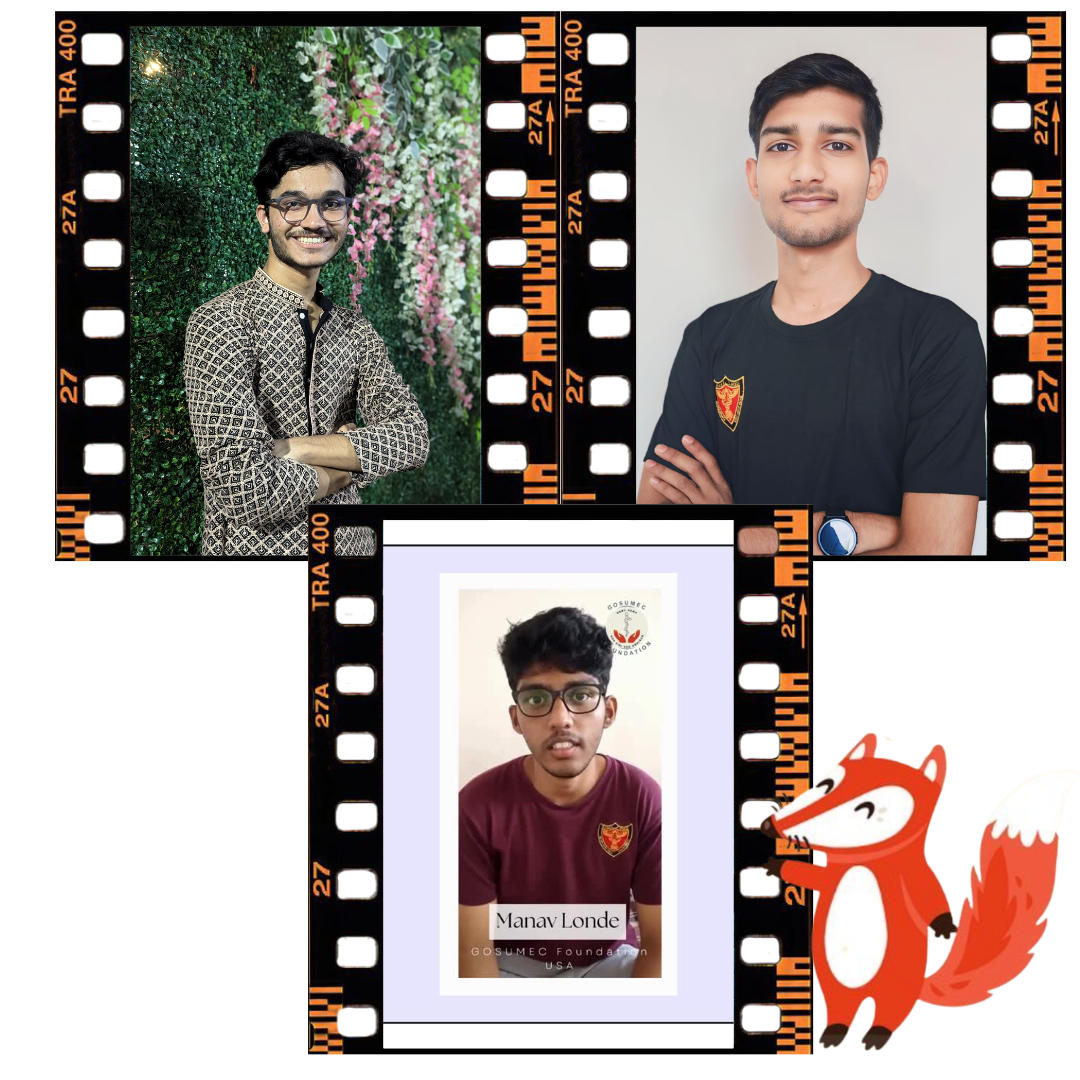
Using MemoryFox, GOSUMEC began capturing stories with greater intention and structure. Dr. Bindra recorded conversations at alumni gatherings, scholarship events, and in one-on-one interactions, building a growing archive of videos from donors, scholarship recipients, and community members.

These stories revealed more than scholarship outcomes — they illuminated the motivations behind giving and the shared values uniting alumni across generations. Authentic and emotionally clear, the videos offered a window into lived experience that the foundation had never previously documented in a comprehensive way.

2. Organizing Stories With Ethical Precision

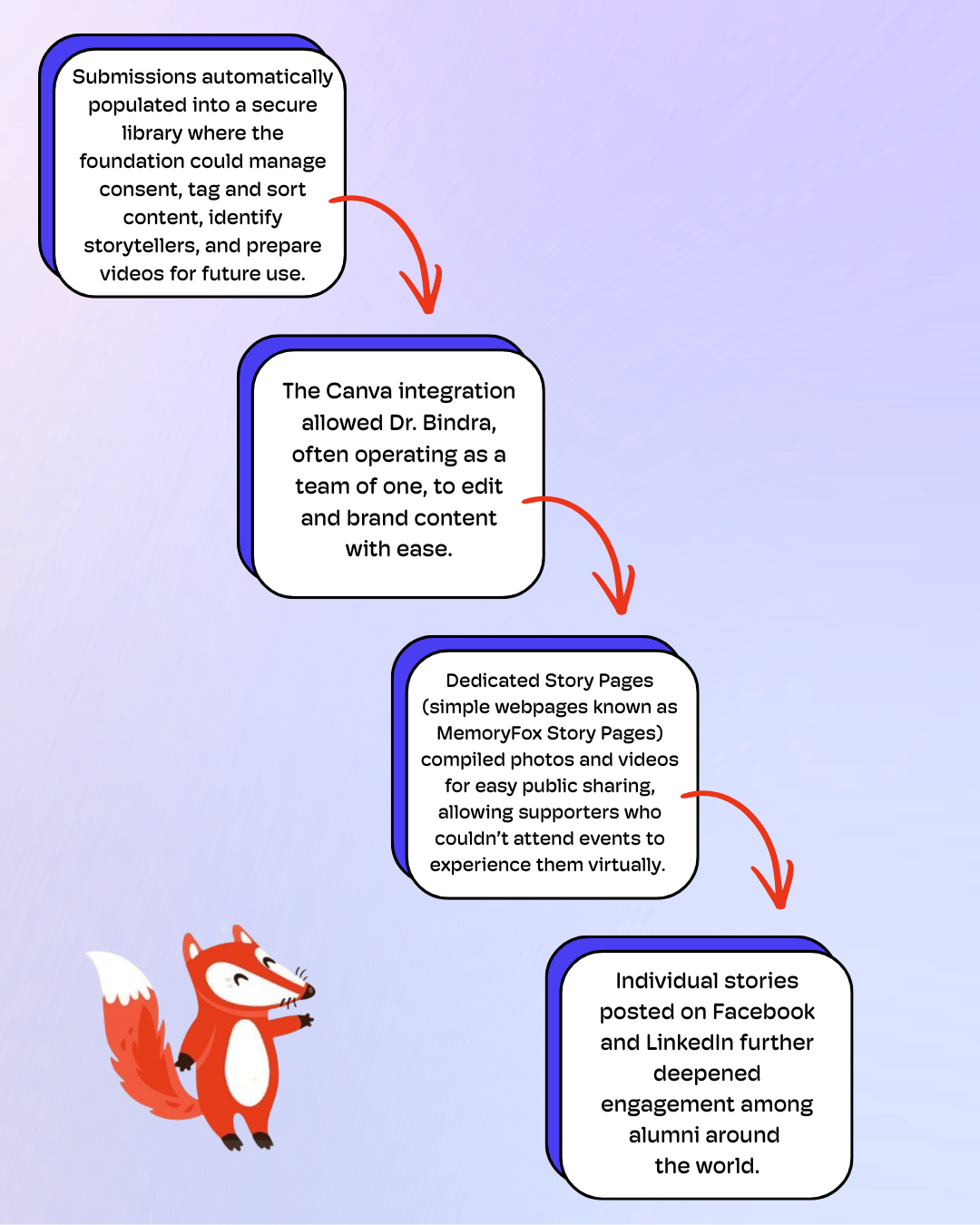
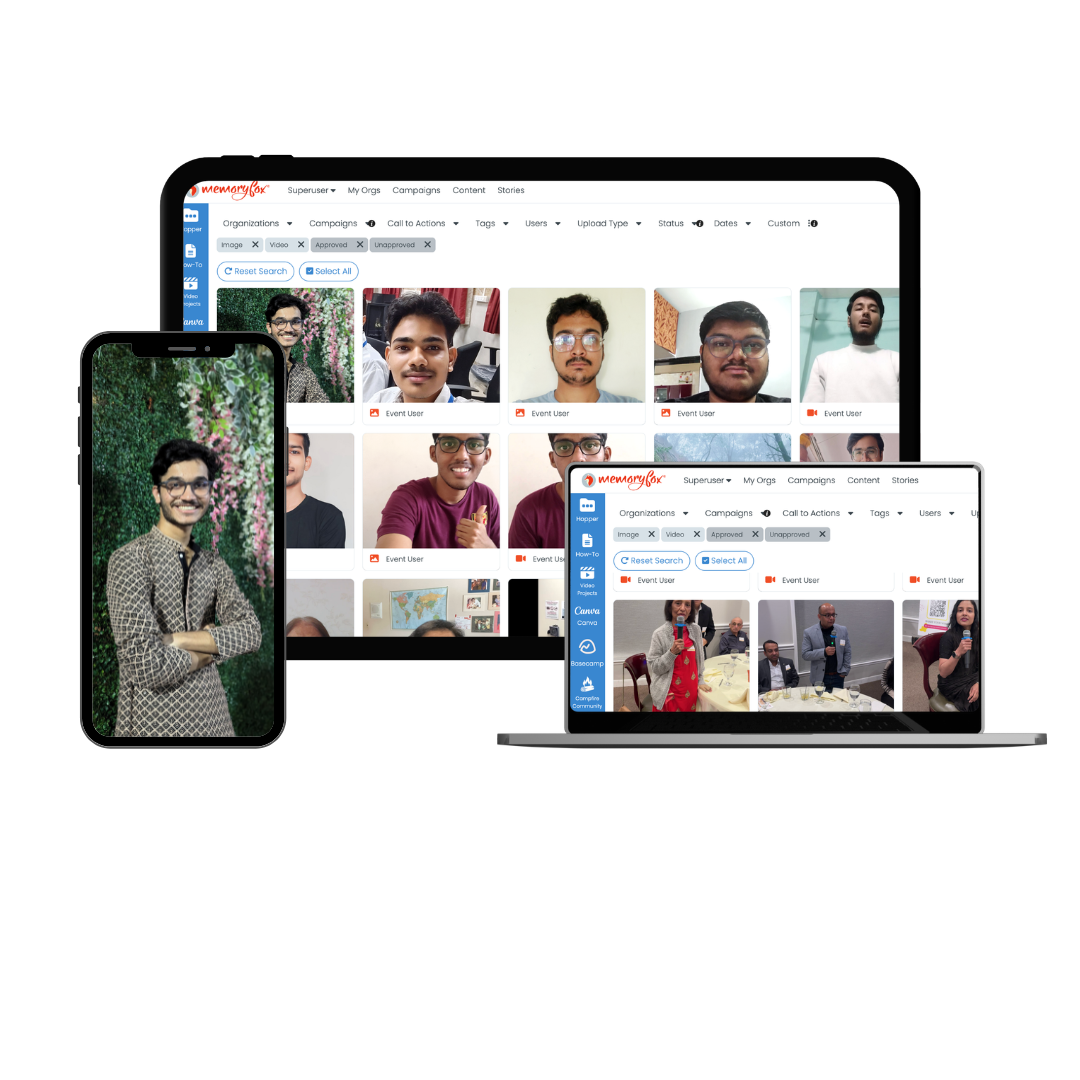
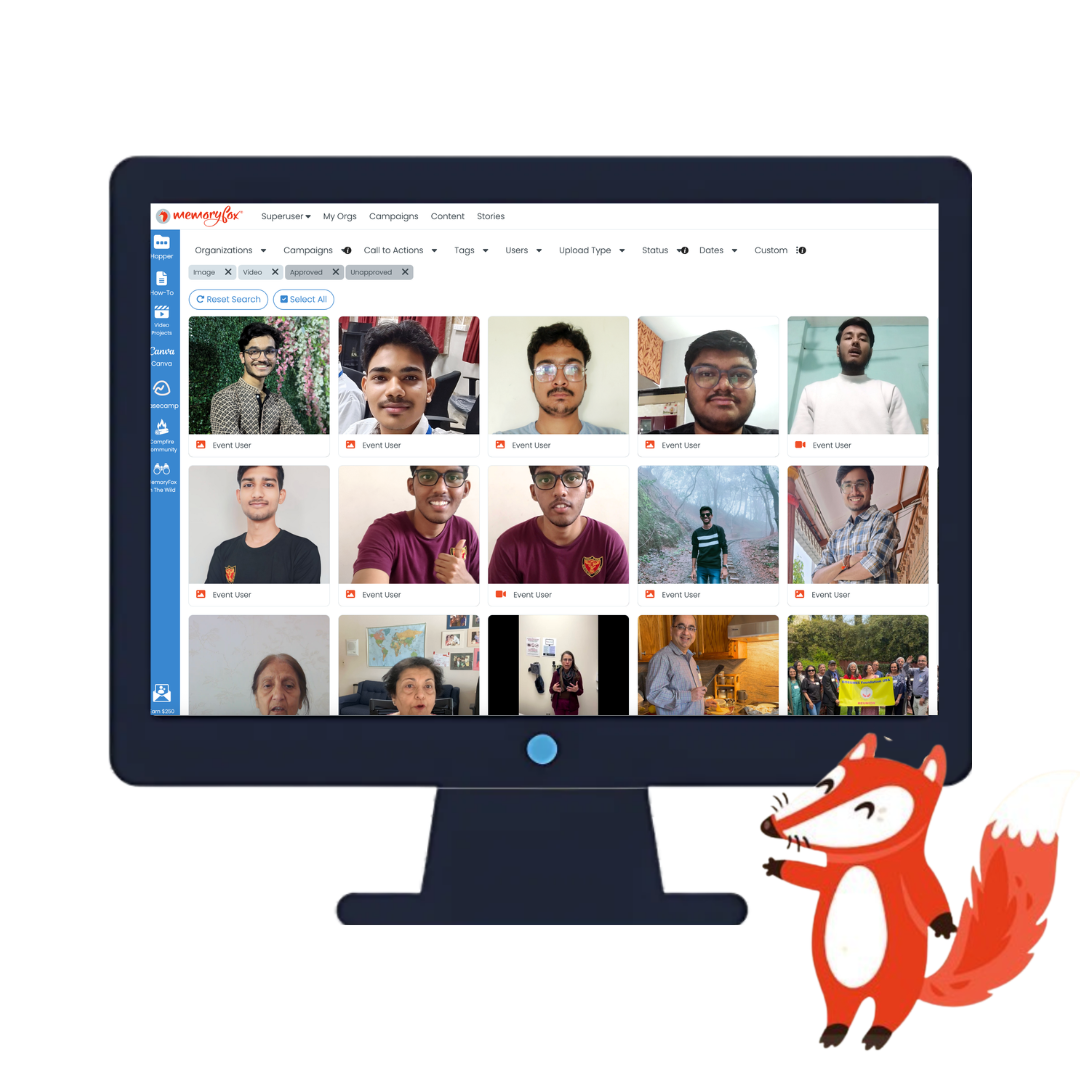
As the archive expanded, the need for infrastructure became clear. MemoryFox’s Story Bank provided a secure environment where the foundation could manage consent, tag and organize submissions, identify storytellers, and prepare videos thoughtfully for future use.

The Canva integration allowed Dr. Bindra, often operating as a team of one, to edit and brand content with ease.

Submissions automatically populated into a secure library where the foundation could manage consent, tag and sort content, identify storytellers, and prepare videos for future use.

Dedicated Story Pages (simple webpages known as MemoryFox Story Pages) compiled photos and videos for easy public sharing, allowing supporters who couldn’t attend events to experience them virtually.

Individual stories posted on Facebook and LinkedIn further deepened engagement among alumni around the world.

The result was not simply a media library, but a durable system ensuring that each story is stewarded with respect and ethical care.

3. Sharing Stories — and Strengthening Trust

Once organized, these stories became central to how GOSUMEC engaged its global alumni community.

The impact has been measurable.
“Our storytelling-led approach helped grow our community to nearly 400 members, up from just 25 in our first year,” said Dr. Bindra.
Fundraising outcomes followed a similar trajectory. The foundation has raised over $1.3 million in 2026, moving steadily toward a $3 million+ perpetual endowment, all while maintaining a zero-staff model. Authentic storytelling has served as a powerful credibility driver, helping donors clearly see the human outcomes their support makes possible.
More than 80% of donors are now repeat or sustaining contributors, with many deepening their engagement after encountering student and legacy stories. Some of the foundation’s most innovative philanthropic pathways — including Legacy and Mini Legacy Scholarships — emerged organically through peer-to-peer storytelling among alumni.

“One person’s story inspired another,” Dr. Bindra noted. “Momentum followed naturally.”

4. Storytelling as a System — Not a Strategy

What distinguishes GOSUMEC’s approach is its philosophy: storytelling is not a marketing tactic but a relationship-building practice embedded within organizational design.

Each narrative captures the “why,” “what,” and “how” shaping the life of the foundation — why donors give, what sustains alumni connection, and how scholarships reshape student trajectories. Technology alone does not create community. But when aligned with values, it can accelerate trust at scale.

This philosophy now informs the GIVE Study, a prospective, real-time examination of relational giving within zero-staff nonprofits. Study findings show the foundation has outperformed national benchmarks for peer organizations — an outcome Dr. Bindra attributes in large part to the deliberate integration of intimate storytelling with accessible, human-centered technology.

“Storytelling is one of the key reasons we are successful,” he said. “When supported by the right infrastructure, it becomes an engine of identity, empathy, and trust.”
For GOSUMEC Foundation USA, storytelling has matured into institutional infrastructure — strengthening belonging, reinforcing transparency, and quietly powering sustained generosity.
What began as a practical solution for an alumni network is evolving into a replicable model for mission-driven organizations seeking to build durable communities without expanding overhead.

At GOSUMEC, storytelling is not simply how impact is communicated. It is how community is built.

Dr. Sanjay, GOSUMEC Foundation

"Storytelling is one of the key reasons we are successful. When supported by the right infrastructure, it becomes an engine of identity, empathy, and trust. "

Dr. Bindra

Founder & President