Research Proves It: Stories Beat Stats Every Time

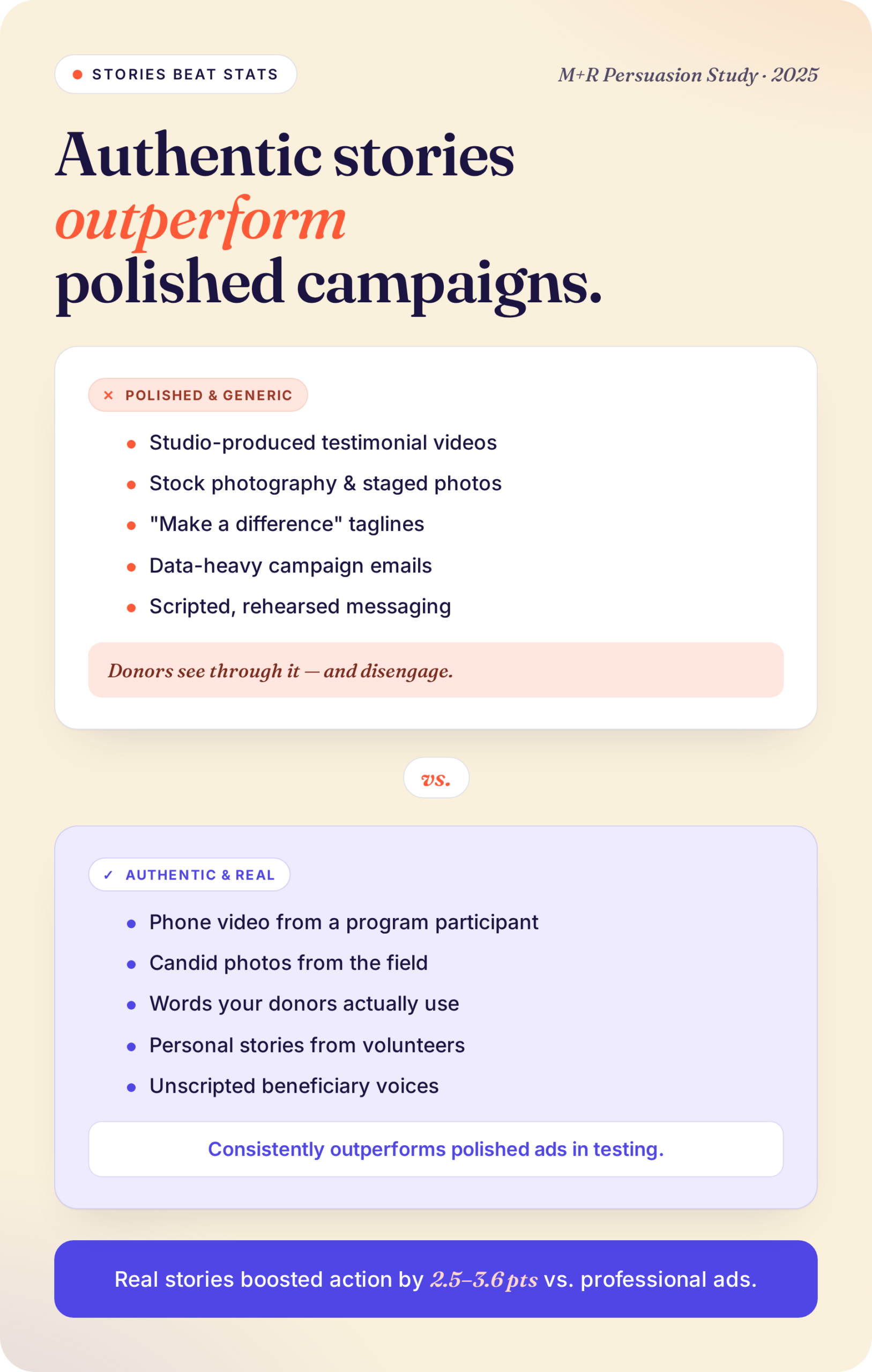
A recent M+R persuasion study analyzed advocacy campaigns across 2024 and 2025 and found that authentic storytelling, featuring real people and relatable language, consistently outperformed polished, data-heavy messaging.

One test told the whole story: a simple video of a real mother advocating for her son’s healthcare coverage boosted viewers’ likelihood to take action by 2.5 to 3.6 percentage points, outperforming a traditional, professionally produced ad across every audience measured. It was rated more persuasive, more relatable, and more engaging.

The takeaway for nonprofits? The perfectly-polished testimonial, the stock photo, the “make a difference” tagline – donors see right through them. What moves people is real.

And real is exactly what MemoryFox helps you collect.

“Authentic storytelling campaigns featuring real people consistently performed best.”M+R Persuasion Experiment Research, 2025

Storytelling Drives Fundraising – Here’s the Proof

Data inspires spreadsheets. Stories inspire donations.

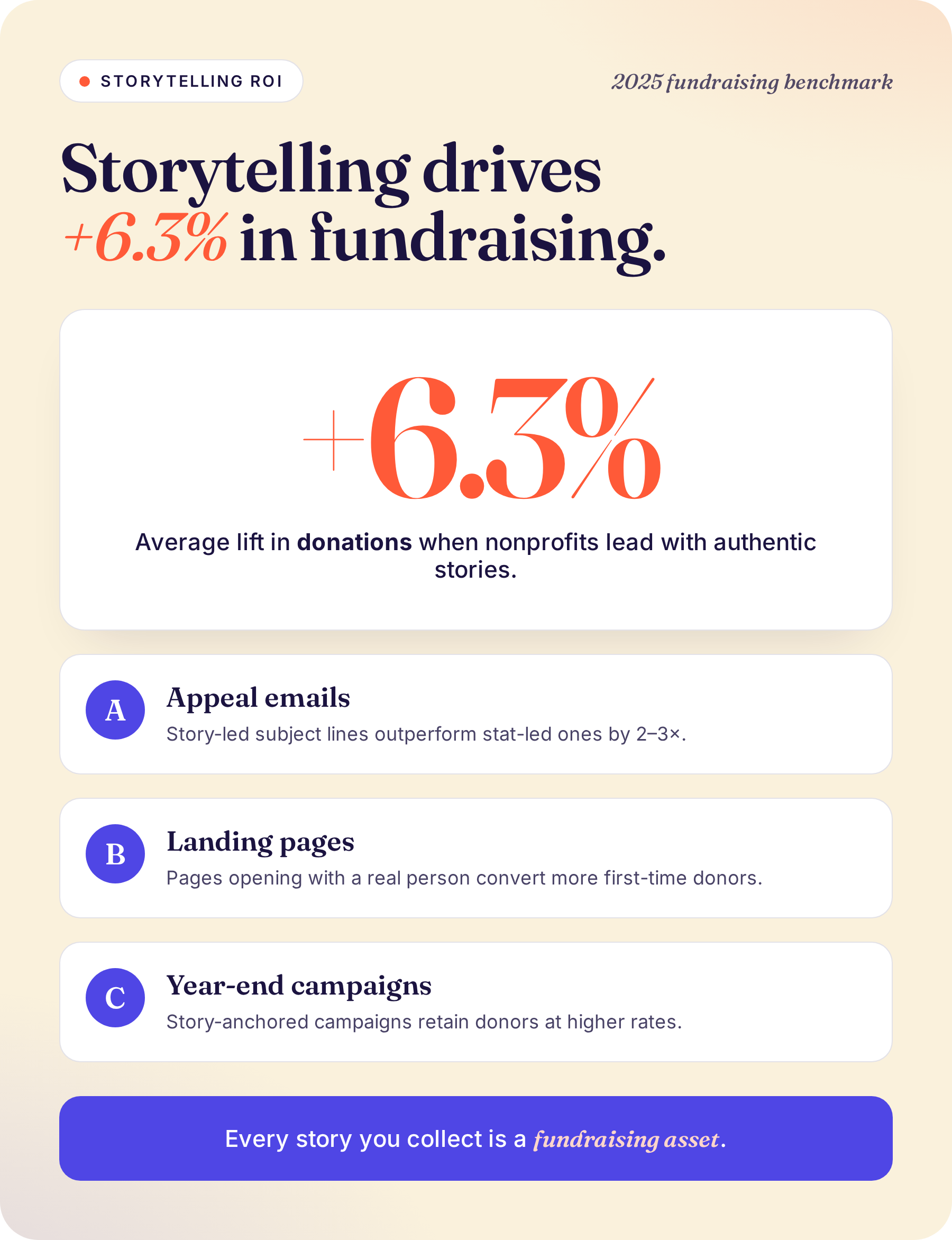
When Feeding America shifted to language that reflected how their donors actually talked about hunger, skipping the jargon, using the words real people use, support for their cause increased by 6.3%. Not because they spent more on ads. Because they listened first.

The lesson: it’s not just what you say, it’s how you say it. When your fundraising appeals reflect the authentic voices of your community, donors feel seen, not sold to.

With a steady stream of community stories collected through MemoryFox, you can:

  • Write grant narratives with real beneficiary voices at the center
  • Craft donor emails that use the language your supporters already believe in
  • Build year-end campaigns anchored in truth, not templates
  • Create content that gets read, shared, and acted on

        The Best Storytelling Isn’t Perfect, It’s Authentic

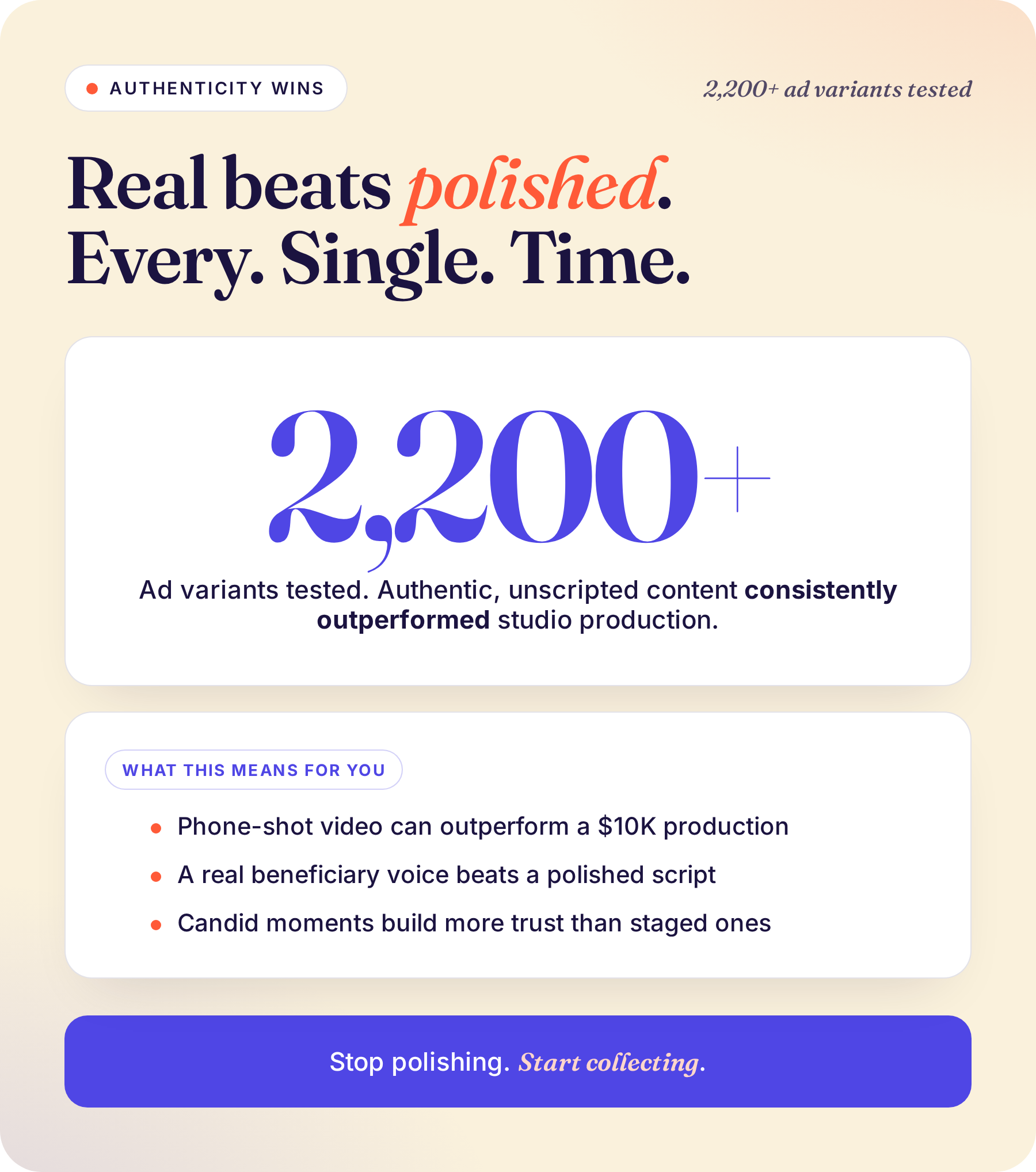
        Here’s something that might surprise you: in head-to-head campaign testing, rough selfie videos and personal content from real community members consistently outperformed high-production ads.

        The Put Families First campaign tested nearly 2,200 ad variants. Personal storytellers and micro-influencers generated the highest click-through rates, not the polished studio content.

        For nonprofits, this is liberating news. You don’t need a film crew. You don’t need a full creative team. You need a way to consistently capture and share the real voices of your community, from beneficiaries, volunteers, staff, and long-time donors.

        That’s exactly what MemoryFox makes simple. Collect stories by phone, text, or email. Share them across your communications, all without burning out your team.

        A quick phone video from someone on-site at your program might just outperform your most expensive shoot.

          Your Most Powerful Storytellers Aren’t on Your Staff

          Another finding from the M+R research: when Feeding America wanted to reach new audiences, their local food banks (not the national brand) were the most trusted voices. Ads from those local messengers achieved a 10% increase in people who viewed their work’s community impact as positive.

          The same principle applies to every nonprofit: your community’s voices carry more weight than your marketing team’s messaging.

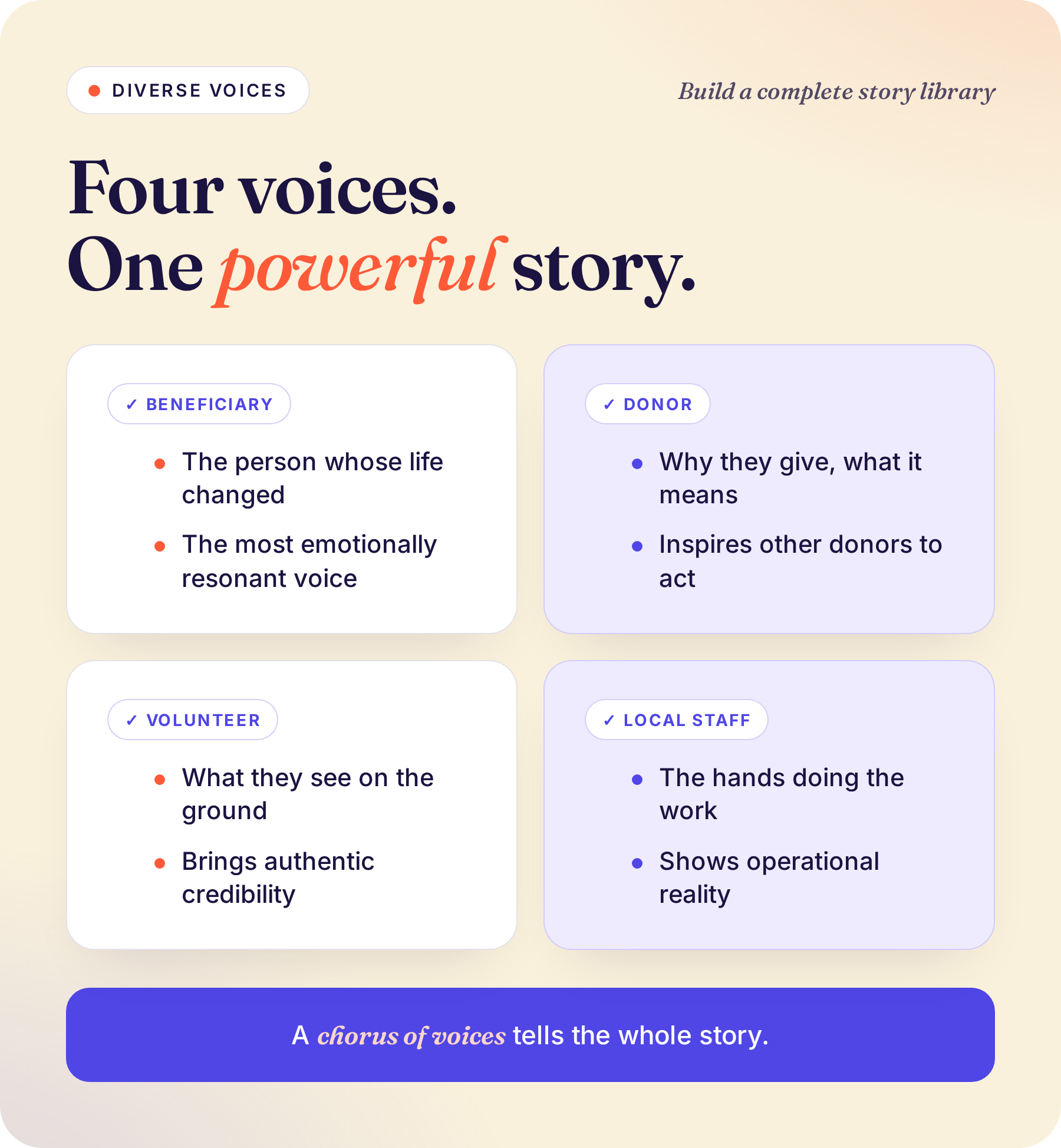
          This means your most powerful content comes from:

          • Beneficiaries sharing their experience in their own words
          • Long-term donors explaining why they stay
          • Volunteers describing what they’ve witnessed firsthand
          • Local staff and chapter leaders speaking to their specific community

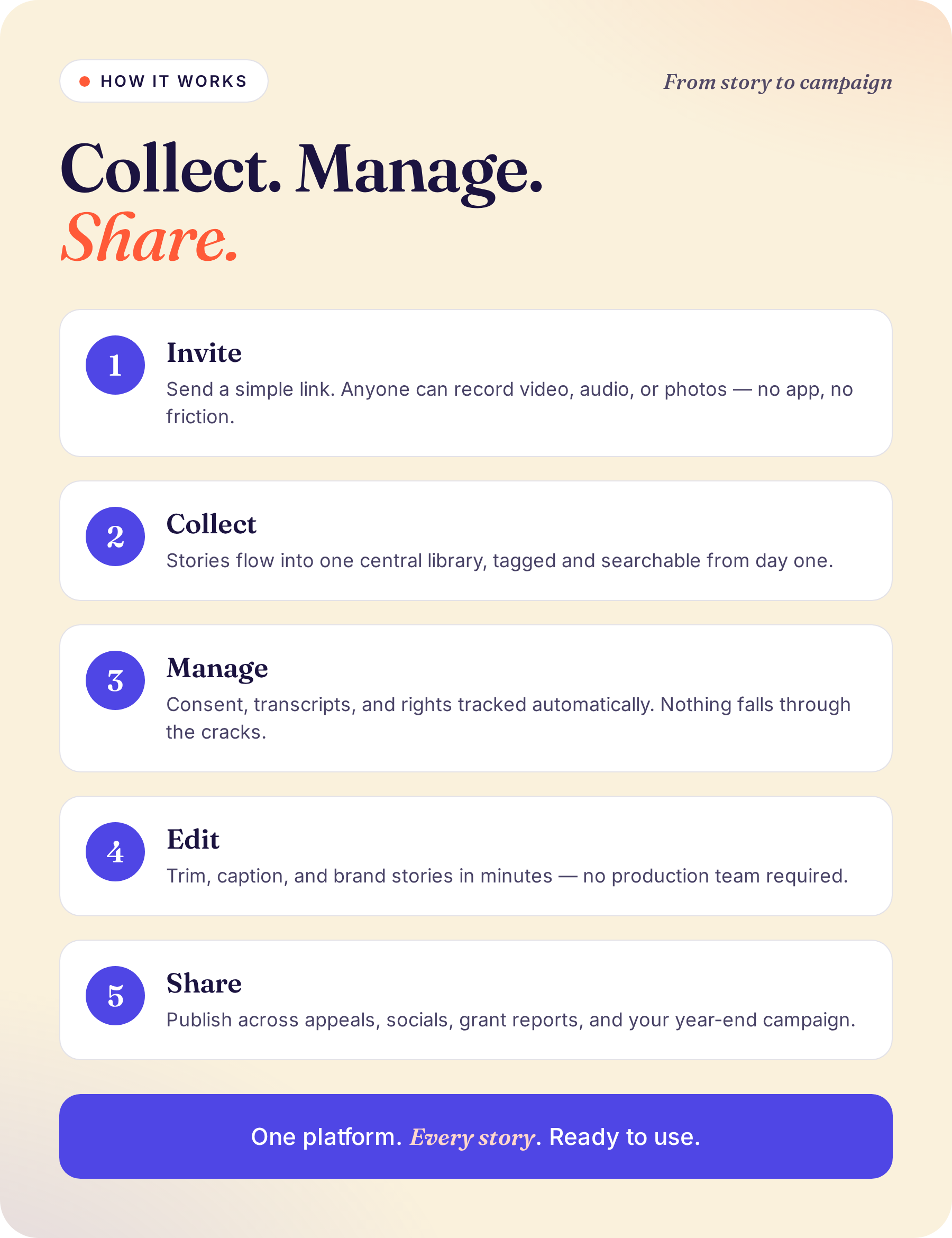
          MemoryFox makes it easy to invite, collect, and organize stories from all of these voices – ethically, consistently, and without chasing people down.

          3 in 4 Donors Give Because of Identity, Community, and Connection – Not Because You Asked

          According to the 2026 Neon One Recurring Giving Report, only about 1 in 4 donors respond primarily to a direct ask. The other three give because of something much deeper: their personal identity, the change they want to see in the world, and the influence of the people around them.

          The GoFundMe Pro Gen Z Report confirms it: 57% of giving is influenced by social relationships, friends, family, coworkers, and community.

          Gen Z donors in particular aren’t rejecting generosity. They’re rejecting impersonal, transaction-heavy fundraising. What they want is authenticity, transparency, belonging, and connection.

          Storytelling is exactly how you deliver all of that.

          When donors receive regular, authentic stories from your community, they don’t just see your impact; they feel part of it. And donors who feel part of something stay.

          “You do not pressure people into community. You invite them in.”GIVE Study / GIVE Arc Playbook

          Why Most Nonprofits Are Celebrating the Wrong Wins

          Here’s what the data says about the average small nonprofit’s fundraising program — and why it should change how you think about storytelling as a retention strategy.

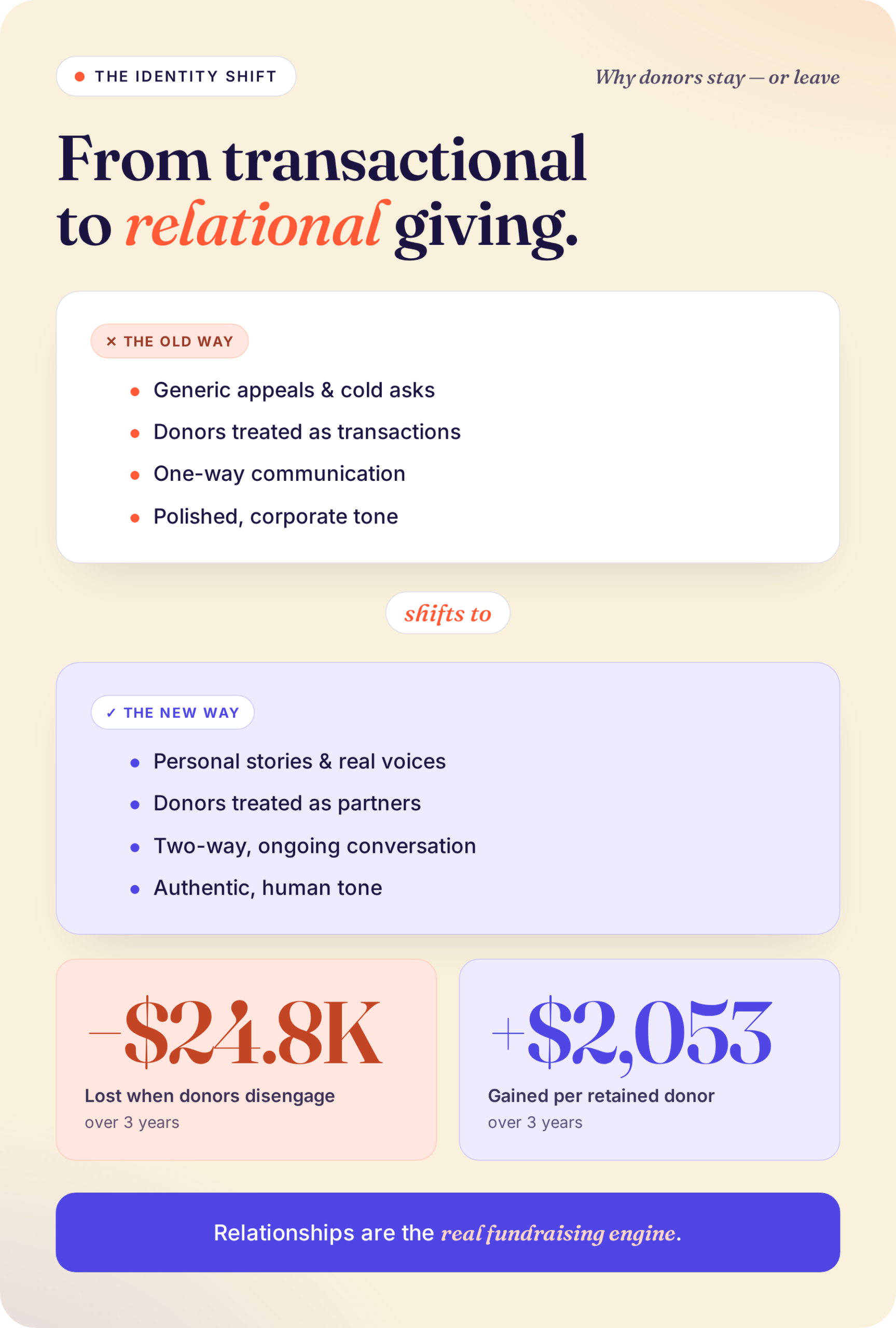
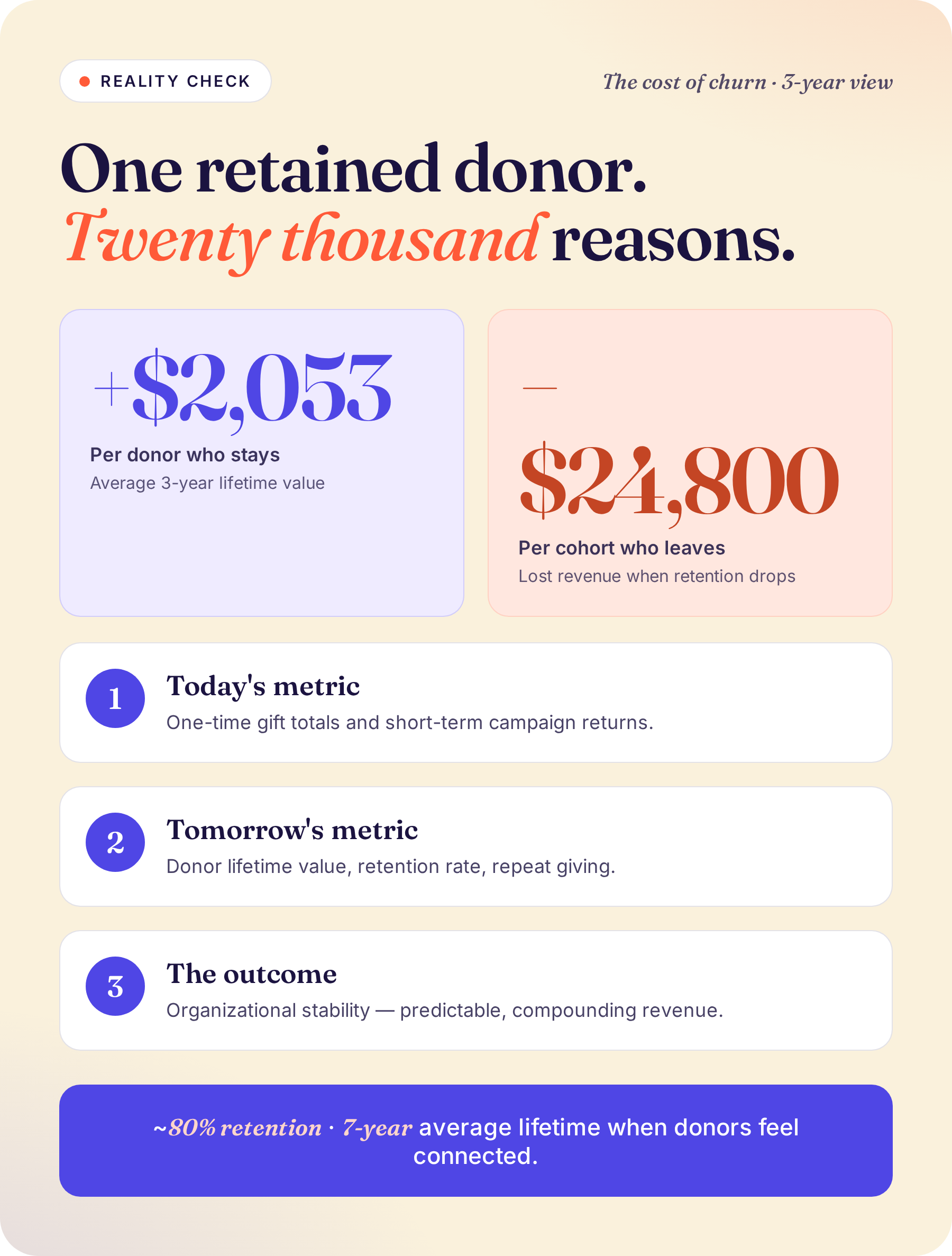
          Over 3 years, the average small nonprofit went from 11 to 14 recurring donors and added $2,053 in recurring revenue. That’s what the sector calls growth.

          Meanwhile, active supporters dropped by 26 people, a 5.3% decline, and total donation revenue fell from $253,300 to $228,500. A $24,800 loss while celebrating a $2,053 gain.

          The culprit isn’t recurring giving itself. Recurring donors are the healthiest part of the system: ~80% retention rates, nearly 7-year donor lifetimes, and dramatically higher lifetime value. The problem is the playbook, one built on urgency, pressure, and one-time asks instead of relationships.

          Small nonprofits don’t survive on transactions. They survive on belonging. And belonging is built through stories.

          Going from 11 recurring donors to 14 creates a better metric. Going from 14 to 50 creates organizational stability. Storytelling is what bridges that gap.

          Storytelling That Works, Without Burning Out Your Team

          You know storytelling matters. The challenge is doing it consistently, without adding another full-time job to your plate.

          MemoryFox is built for exactly that. We make it simple for nonprofits of every size to:

          Collect stories ethically from beneficiaries, donors, volunteers, and staff; by phone, text, or email, no tech skills required.

          Manage a living library of real content your whole team can access and search, organized and ready to use.

          Share authentic stories across every channel: grant proposals, donor newsletters, social media, annual reports, and more.

          No chasing. No complicated tools. No expensive production. Just a consistent, community-powered content engine that keeps your mission visible and your donors connected.

          Ready to Make Storytelling Work for Your Nonprofit?